
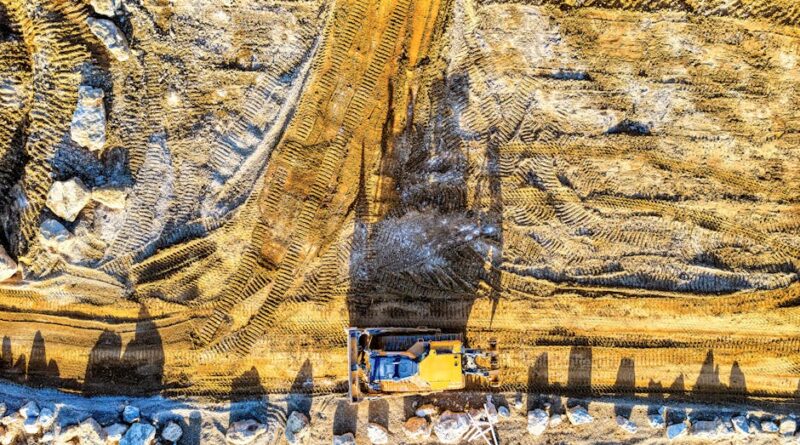
Caterpillar & Nvidia Bring AI to Construction Equipment
The clang of steel, the roar of engines, and the rhythmic churn of earth have long defined construction sites. However, a silent revolution is now taking root, promising to transform these rugged landscapes into intelligent, hyper-efficient ecosystems. The groundbreaking collaboration between industrial giant Caterpillar and AI powerhouse Nvidia marks a pivotal moment, ushering in an era where heavy machinery doesn’t just respond to commands but anticipates needs and optimizes operations with unprecedented autonomy.
Indeed, this partnership is not merely an incremental upgrade; it represents a fundamental shift in how we conceive of construction equipment. Caterpillar is actively piloting “Cat AI,” an advanced system of AI agents, meticulously built upon Nvidia’s cutting-edge physical AI platform, directly within its formidable excavators. Consequently, the future of construction is no longer a distant vision but a tangible reality, powered by the seamless integration of artificial intelligence into the very heart of heavy machinery.
The Dawn of Intelligent Construction: Caterpillar and Nvidia’s Vision
For decades, Caterpillar has stood as an undisputed leader in manufacturing robust and reliable construction and mining equipment. Nevertheless, the demands of the modern world — including increased efficiency, enhanced safety, and reduced environmental impact — necessitate a paradigm shift. Enter artificial intelligence, the very technology poised to redefine the capabilities of these industrial titans.
Furthermore, Nvidia, renowned for its groundbreaking work in GPUs and AI platforms, brings the computational muscle and sophisticated algorithmic expertise required to imbue complex physical systems with intelligence. Therefore, their joint venture is not just about adding sensors; it’s about creating machines that can perceive, reason, and act autonomously within dynamic, unpredictable environments. Ultimately, this collaboration aims to unlock new levels of productivity and safety across the entire construction lifecycle.
Catalyst for Change: Why AI Now?
The construction industry faces persistent challenges, ranging from labor shortages and project delays to safety incidents and escalating operational costs. Consequently, traditional methods, while effective, often struggle to keep pace with these evolving pressures. AI offers a compelling solution, promising to automate repetitive tasks, optimize complex processes, and mitigate human error.
Moreover, advancements in sensor technology, edge computing, and AI algorithms have reached a maturity level where real-world deployment in demanding environments like construction sites is not only feasible but increasingly advantageous. This technological confluence allows for the creation of truly intelligent machines capable of understanding their surroundings and making informed decisions in real-time. Thus, the timing for Cat AI could not be more opportune.
Cat AI: Unpacking the Physical AI Platform
At the core of this transformative initiative lies “Cat AI,” a system designed to empower heavy equipment with intelligence previously confined to science fiction. Specifically, this system leverages a network of AI agents, each programmed to handle distinct aspects of an excavator’s operation, all orchestrated by Nvidia’s robust physical AI platform. This comprehensive approach ensures that every facet of the machine’s interaction with its environment is considered and optimized.
Conversely, unlike simpler automation systems that follow pre-programmed instructions, Cat AI’s agents possess the capacity for learning and adaptation. Therefore, they can process vast amounts of data from sensors, cameras, and other inputs, enabling them to perceive the job site with unparalleled clarity. This sophisticated perception is crucial for navigating complex terrains and executing intricate tasks.
What Are AI Agents and How Do They Function?
In the context of Cat AI, an “AI agent” is a modular software entity designed to perform specific functions, much like a specialized crew member on a construction team. For instance, one agent might be responsible for analyzing soil composition, while another focuses on optimizing digging angles for maximum efficiency. Furthermore, yet another agent could be dedicated to real-time obstacle detection and avoidance.
These agents operate collaboratively, sharing information and coordinating their actions through Nvidia’s platform. Consequently, this multi-agent system allows for a holistic approach to machine control, where individual tasks are executed with precision and integrated seamlessly into a larger operational strategy. This distributed intelligence makes the excavator remarkably agile and responsive.
The Power of Simulation and Digital Twins
Developing and refining AI for complex physical systems demands rigorous testing in diverse scenarios. Nvidia’s platform excels in this area by enabling the creation of highly realistic digital twins – virtual replicas of the physical excavators and their operating environments. Moreover, these digital twins allow developers to simulate countless hours of operation, testing AI agents under various conditions without risking actual equipment or personnel.
Subsequently, this simulation-driven development accelerates the learning process for the AI, allowing it to encounter and solve problems in a virtual space before deployment. This iterative process of training, testing, and refining in a digital environment significantly enhances the robustness and reliability of Cat AI in the real world. Ultimately, it reduces development costs and speeds up innovation cycles.
Revolutionizing the Job Site: How AI Elevates Excavator Operations
The integration of Cat AI promises to revolutionize every aspect of excavator operation, moving beyond mere automation to truly intelligent performance. Operators will experience a significant shift in their roles, transitioning from direct manual control to supervisory oversight, focusing on strategic decision-making rather than repetitive physical tasks. This evolution enhances both productivity and job satisfaction.
Furthermore, the ability of AI to continuously learn and adapt means that excavators will become progressively more efficient over time, optimizing fuel consumption, minimizing wear and tear, and executing tasks with unparalleled precision. Consequently, this leads to substantial operational savings and extended equipment lifespans. The benefits extend far beyond the immediate task at hand.
Enhanced Precision and Efficiency
Traditional excavators rely heavily on operator skill and judgment, which can vary. However, Cat AI introduces a level of precision that human operators, regardless of their experience, often struggle to match consistently. The AI agents can execute digging, lifting, and grading tasks with millimeter-level accuracy, minimizing rework and material waste.
Moreover, the AI can continuously analyze factors like soil density, material volume, and optimal load paths, dynamically adjusting its operations for peak efficiency. This intelligent optimization translates directly into faster project completion times and reduced operational costs. Consequently, construction projects can adhere more closely to schedules and budgets, improving overall profitability.
Unprecedented Safety Standards
Construction sites are inherently hazardous environments, and human error remains a leading cause of accidents. Conversely, AI-powered excavators, equipped with a comprehensive array of sensors and advanced perception capabilities, can detect potential hazards with greater consistency and speed than human operators. They can identify obstacles, proximity to other machines or personnel, and unstable ground conditions.
Furthermore, the AI can react instantaneously to prevent collisions or dangerous situations, often before a human operator could even perceive the threat. This proactive safety management significantly reduces the risk of accidents, protecting both on-site personnel and valuable equipment. Ultimately, this leads to a safer working environment for everyone involved.
Optimizing Resource Management
Fuel consumption and equipment maintenance are significant operational costs in heavy construction. Cat AI can play a crucial role in optimizing these resources. For instance, by operating the excavator with maximum efficiency, the AI minimizes unnecessary movements and engine strain, leading to substantial reductions in fuel consumption. This not only saves money but also lowers the carbon footprint of construction activities.
Similarly, the AI’s ability to monitor machine performance continuously allows for predictive maintenance. It can identify potential issues before they escalate into costly breakdowns, scheduling servicing proactively rather than reactively. Consequently, this minimizes downtime, extends the life of components, and ensures that equipment remains operational for longer periods. This smart resource management is a game-changer for profitability and sustainability.
Nvidia’s Role: Powering the Future of Physical AI
Nvidia’s involvement is not merely as a component supplier but as a foundational partner providing the very architecture upon which Cat AI is built. Their physical AI platform is specifically designed to handle the unique challenges of real-world robotics and autonomous systems, particularly in demanding industrial contexts. This platform integrates hardware, software, and development tools, creating a comprehensive ecosystem for AI deployment.
Moreover, Nvidia’s expertise in parallel computing and high-performance processing is indispensable for managing the vast amounts of data generated by an autonomous excavator. Their GPUs are adept at running complex AI models and simulations, enabling the real-time decision-making capabilities that Cat AI requires. Consequently, Nvidia is not just a vendor; they are the intellectual backbone empowering this new generation of intelligent machinery.
From Pixels to Physicality: Bridging the Gap
Nvidia’s journey began with graphics processing, rendering complex virtual worlds. However, their technological evolution has seamlessly transitioned into understanding and interacting with the physical world. Their platforms now bridge the gap between digital simulation and real-world application, making them ideal for projects like Cat AI. This capability allows for sophisticated environment perception and interaction.
Furthermore, their Isaac robotics platform, upon which physical AI concepts are often built, provides the tools and frameworks necessary for developing, simulating, and deploying AI-powered robots. This comprehensive toolkit accelerates the development cycle and ensures that the AI deployed in Caterpillar’s excavators is robust and reliable. Indeed, Nvidia is at the forefront of this convergence of virtual and physical intelligence.
Challenges and the Road Ahead for AI in Construction
While the prospects of AI in construction are incredibly exciting, the path forward is not without its challenges. Integrating highly sophisticated AI into existing construction workflows requires careful planning, significant investment, and a willingness to adapt. Moreover, the sheer complexity and variability of construction sites present unique hurdles for autonomous systems.
Nevertheless, the collaboration between Caterpillar and Nvidia demonstrates a clear commitment to overcoming these obstacles. The ongoing pilot programs are crucial for gathering real-world data, identifying unforeseen issues, and refining the AI models. Consequently, continuous iteration and robust testing will be paramount to the widespread adoption of Cat AI and similar technologies.
Addressing Data Security and Connectivity
Autonomous equipment generates and processes immense volumes of data, from sensor readings to operational logs. Securing this data and ensuring reliable, low-latency connectivity on often remote construction sites are critical challenges. Furthermore, robust cybersecurity measures are essential to protect against potential threats and maintain operational integrity. This requires significant infrastructure investment.
Conversely, advancements in 5G technology and edge computing are beginning to provide viable solutions for these connectivity and processing demands. By processing data closer to the source, edge computing reduces latency and bandwidth requirements, enhancing the responsiveness of AI systems. Consequently, the industry must continue to invest in these foundational technologies to unlock the full potential of AI.
Workforce Adaptation and Training
The introduction of AI-powered equipment will inevitably change the nature of jobs on construction sites. While some tasks may be automated, new roles will emerge, requiring different skill sets. Furthermore, training the existing workforce to operate, supervise, and maintain these advanced machines will be crucial for successful adoption. This transition necessitates a proactive approach to education and skill development.
Therefore, companies must invest in comprehensive training programs that equip their employees with the necessary expertise in AI supervision, data analysis, and advanced diagnostics. This proactive approach ensures that the human element remains central to the construction process, evolving alongside the technology. For instance, understanding platforms like Google Classroom Gemini Podcasts: Transforming Education could offer insights into how AI-powered educational tools are already changing learning, providing a useful parallel for workforce upskilling in construction.
Key Takeaways
- Caterpillar and Nvidia Partnership: Caterpillar is piloting “Cat AI,” an advanced system of AI agents built on Nvidia’s physical AI platform, in its excavators.
- Physical AI Defined: Cat AI uses multiple AI agents to perceive, reason, and act autonomously, moving beyond simple automation.
- Nvidia’s Core Contribution: Nvidia provides the foundational hardware, software, and simulation tools (digital twins) necessary for developing and deploying robust physical AI.
- Revolutionizing Operations: AI integration promises enhanced precision, efficiency, and unprecedented safety standards on construction sites.
- Resource Optimization: Cat AI aims to optimize fuel consumption, minimize wear and tear, and enable predictive maintenance, leading to significant cost savings and environmental benefits.
- Challenges Ahead: Hurdles include data security, connectivity, and the need for workforce adaptation and training to effectively manage AI-powered equipment.
- Future Impact: This collaboration signals a major shift towards intelligent, autonomous heavy machinery, redefining the future of the construction industry.
Final Thoughts
The alliance between Caterpillar and Nvidia represents more than just a technological advancement; it signifies a bold leap into the future of heavy industry. By integrating sophisticated AI agents into its excavators, Caterpillar is not merely improving existing machinery; it is fundamentally redesigning the very concept of construction equipment. This initiative underscores a commitment to innovation that will undoubtedly set new benchmarks for efficiency, safety, and sustainability across the globe.
As we move forward, the lessons learned from the pilot programs and the continuous development of Cat AI will pave the way for broader applications across various sectors, from mining to logistics. Therefore, the intelligent excavator of today is merely the precursor to an entire ecosystem of smart, autonomous industrial machines. The future of construction is here, and it’s powered by intelligence.
What are your thoughts on AI transforming heavy machinery? Share your insights and predictions in the comments below!