
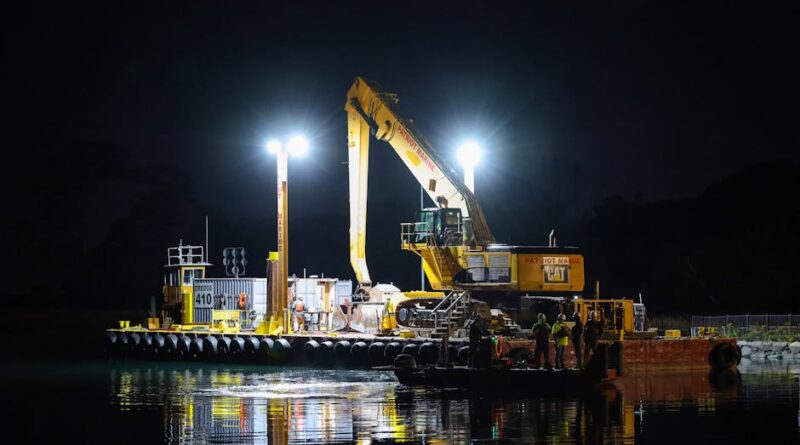
Caterpillar & Nvidia Bring AI to Construction
The rumble of heavy machinery on a construction site has long been a symbol of human ingenuity and sheer power. However, a revolutionary shift is now underway, as artificial intelligence begins to redefine what these titans of industry can achieve. Consequently, Caterpillar, a global leader in construction and mining equipment, is embarking on a pioneering journey, integrating cutting-edge AI directly into its formidable machines.
This groundbreaking initiative, powered by Nvidia’s advanced physical AI platform, promises to usher in an era of unprecedented efficiency, safety, and precision on jobsites worldwide. Furthermore, the introduction of ‘Cat AI’ agents within excavators signifies a monumental leap, transforming brute force into intelligent operation. Therefore, the future of construction is not just about bigger machines, but smarter ones.
The Dawn of Intelligent Construction: Caterpillar Embraces AI
The construction industry, often perceived as traditional, is currently undergoing a profound technological transformation. Specifically, the integration of artificial intelligence into heavy equipment represents a pivotal moment, promising to reshape operational paradigms. Moreover, Caterpillar’s recent announcement regarding its collaboration with Nvidia marks a significant milestone in this ongoing evolution.
This partnership is not merely an incremental upgrade; instead, it signifies a fundamental reimagining of how construction tasks are executed. Consequently, machines are no longer just tools but are becoming intelligent partners capable of complex decision-making. Therefore, the vision for intelligent construction is rapidly becoming a tangible reality.
A Strategic Alliance: Caterpillar and Nvidia’s Vision
The alliance between Caterpillar and Nvidia brings together two industry giants from vastly different sectors: heavy machinery and advanced computing. On the one hand, Caterpillar possesses unparalleled expertise in designing robust, high-performance equipment that withstands the harshest environments. On the other hand, Nvidia stands at the forefront of AI innovation, particularly in the realm of physical AI and simulation.
This synergistic collaboration aims to embed sophisticated AI capabilities directly into construction equipment, moving beyond mere automation. Furthermore, their shared vision extends to creating a future where machines can perceive, understand, and interact with their surroundings with human-like intelligence. Ultimately, this strategic partnership is poised to set new benchmarks for productivity and operational excellence in the construction world.
Unpacking Cat AI: The Brain Behind the Brawn
At the heart of Caterpillar’s AI initiative lies ‘Cat AI,’ a sophisticated system of AI agents designed to imbue excavators with advanced cognitive abilities. Consequently, these agents are not simply programmed to follow a set of rules; instead, they are built to learn, adapt, and make informed decisions in dynamic environments. Therefore, this represents a significant departure from traditional machine control systems.
The pilot program, focusing on excavators, showcases the immediate potential of this technology. Furthermore, these AI agents are engineered to process vast amounts of sensory data, ranging from lidar and radar to high-definition cameras, allowing them to construct a detailed understanding of their operational space. Just as every complex system begins with foundational elements, like a programmer’s initial “hello world”, this new era of intelligent machines is building from advanced AI primitives. Moreover, this capability enables the excavator to perform tasks with unparalleled precision, safety, and efficiency.
Nvidia’s Physical AI Platform: Powering the Next Generation
Nvidia’s role in this transformative partnership is absolutely crucial, providing the foundational technology for Cat AI. Specifically, their physical AI platform is renowned for its ability to simulate real-world physics and environments with incredible accuracy. Consequently, this platform allows for the development and training of AI models in virtual spaces before deployment in actual machinery.
This approach dramatically accelerates the development cycle and reduces the risks associated with testing in physical environments. Furthermore, the platform leverages Nvidia’s powerful GPUs and specialized software stacks, which are essential for processing the massive datasets required for advanced AI. Therefore, Nvidia’s technological prowess is directly enabling the intelligence within Caterpillar’s next-generation equipment.
From Data Centers to Dirt: Nvidia’s Expanding Influence
Nvidia’s journey from a graphics card pioneer to a leader in AI and accelerated computing has been remarkable. Initially dominant in gaming, their technology quickly found applications in data centers, scientific research, and autonomous vehicles. However, their foray into heavy construction equipment marks a significant expansion of their influence into the industrial sector.
This transition highlights the universal applicability of their AI and simulation technologies, proving that complex algorithms and high-performance computing are just as valuable in a muddy construction pit as they are in a sterile data center. Consequently, Nvidia is not just providing chips; they are offering an entire ecosystem for developing intelligent machines. Moreover, their platform provides the computational muscle needed to handle the complex real-time data processing inherent in autonomous heavy machinery.
The Role of AI Agents in Heavy Machinery
AI agents are central to the intelligence being embedded in Caterpillar’s excavators. In essence, these are autonomous software entities designed to perceive their environment, make decisions, and execute actions to achieve specific goals. Furthermore, they operate within a defined context, continuously learning and adapting based on new data and experiences. Consequently, they bring a new level of autonomy and responsiveness to heavy equipment.
For an excavator, these agents can manage tasks such as optimal digging paths, load balancing, obstacle avoidance, and even predictive maintenance. Moreover, they can coordinate with other machines and human operators, creating a more harmonious and efficient jobsite. Ultimately, the sophistication of these AI agents will determine the true potential and versatility of AI-powered construction equipment.
Transforming the Jobsite: Benefits of AI-Powered Equipment
The introduction of AI-powered construction equipment promises to revolutionize nearly every aspect of jobsite operations. From enhancing the precision of complex tasks to significantly improving safety protocols, the benefits are multi-faceted and far-reaching. Consequently, the traditional challenges faced by project managers and operators are being systematically addressed through intelligent automation. Therefore, the jobsite of tomorrow will be markedly different from today’s.
This technological leap is not merely about doing things faster; instead, it is about doing them smarter, safer, and with greater environmental consciousness. Furthermore, the integration of Cat AI heralds a new era where machines actively contribute to problem-solving and operational optimization. Ultimately, this leads to substantial improvements across the entire project lifecycle.
Enhanced Precision and Efficiency
One of the most immediate and impactful benefits of AI in construction equipment is the dramatic improvement in precision and efficiency. AI agents can execute tasks with a level of accuracy that is difficult for even the most experienced human operators to consistently achieve. For instance, an AI-controlled excavator can dig to exact specifications, minimizing over-excavation and reducing material waste.
Moreover, AI algorithms can optimize digging cycles, fuel consumption, and operational sequences in real-time, leading to significant gains in productivity. Consequently, projects can be completed faster and with fewer resources, directly impacting profitability. Therefore, the ability of AI to analyze vast datasets and make instantaneous adjustments translates directly into superior operational performance.
Boosting Safety Standards
Safety remains a paramount concern on any construction site, where heavy machinery and complex operations inherently carry risks. However, AI-powered equipment offers unprecedented opportunities to mitigate these dangers. Specifically, AI agents can continuously monitor their surroundings for potential hazards, identify risks to personnel, and autonomously prevent collisions.
Furthermore, features like intelligent obstacle detection, proximity warnings, and automated emergency stops significantly reduce the likelihood of accidents. Consequently, this leads to a safer working environment for everyone on site. Therefore, by taking over repetitive or high-risk tasks, AI allows human workers to focus on more strategic and less dangerous aspects of the project, fundamentally improving overall safety standards.
Optimizing Resource Management
Resource management, encompassing fuel, materials, and human labor, is critical for project success and sustainability. AI-powered equipment excels in optimizing these resources through intelligent scheduling, predictive analytics, and real-time adjustments. For example, AI can determine the most fuel-efficient routes for material transport or precisely calculate the exact amount of material needed for a task, minimizing waste.
Moreover, by reducing downtime through predictive maintenance, AI ensures that machines operate at peak efficiency for longer periods, reducing repair costs and extending equipment lifespan. Consequently, this holistic approach to resource optimization not only enhances project profitability but also contributes to more sustainable construction practices. Ultimately, the intelligent allocation of resources becomes a cornerstone of AI-driven operations.
The Road Ahead: Challenges and Opportunities
While the promise of AI in construction is immense, its widespread adoption also presents a unique set of challenges that must be addressed. Navigating these complexities will be crucial for realizing the full potential of intelligent construction. Consequently, a proactive approach to these hurdles is essential for smooth integration. Therefore, careful planning and innovative solutions are required to overcome potential obstacles.
However, each challenge also inherently brings forth new opportunities for innovation, growth, and industry leadership. Furthermore, by understanding and preparing for these issues, stakeholders can strategically position themselves at the forefront of this technological revolution. Ultimately, the successful deployment of AI will depend on how effectively these challenges are met.
Data Security and Privacy Concerns
The operation of AI-powered equipment generates vast quantities of data, including operational metrics, environmental scans, and even potentially sensitive project information. Consequently, ensuring the security and privacy of this data becomes a critical concern. Furthermore, unauthorized access or cyberattacks could lead to operational disruptions, data breaches, or intellectual property theft. Therefore, robust cybersecurity frameworks are absolutely essential.
Developing secure data pipelines, implementing advanced encryption, and establishing clear data governance policies are paramount. Moreover, companies must also consider the ethical implications of data collection and usage, ensuring transparency and compliance with evolving privacy regulations. Ultimately, trust in AI systems hinges on the assurance that data is handled responsibly and securely.
Workforce Adaptation and Training
The integration of AI will undoubtedly transform job roles within the construction industry. While some tasks may become automated, new roles requiring different skill sets will emerge, such as AI system monitoring, data analysis, and robotics maintenance. Consequently, a significant emphasis must be placed on workforce adaptation and comprehensive training programs. Therefore, investing in human capital is as important as investing in technology.
Retraining existing workers and attracting new talent with AI and robotics expertise will be vital for a seamless transition. Furthermore, fostering a culture of continuous learning will enable the workforce to evolve alongside the technology. Ultimately, the human element remains indispensable, as skilled professionals will be needed to supervise, program, and maintain these advanced machines.
Regulatory Frameworks for Autonomous Operations
As construction equipment becomes increasingly autonomous, existing regulatory frameworks, primarily designed for human-operated machinery, will need to evolve. Specifically, new standards and guidelines will be required to address issues of liability, safety certification, and operational protocols for AI-driven systems. Consequently, collaboration between industry, government, and regulatory bodies is essential. Therefore, a clear legal and ethical roadmap is necessary for widespread adoption.
Developing these frameworks proactively will help ensure public trust and facilitate the safe and responsible deployment of autonomous construction technologies. Moreover, international harmonization of standards will be crucial for global companies like Caterpillar. Ultimately, clear regulations will provide the necessary structure for the industry to innovate confidently and responsibly.
Beyond Excavators: The Future Landscape of AI in Construction
While Caterpillar’s initial pilot focuses on excavators, this is merely the beginning of a much broader transformation for the construction industry. The principles and technologies being developed for Cat AI have far-reaching implications, extending across the entire fleet of heavy machinery and beyond. Consequently, the future landscape of construction is set to be profoundly reshaped by AI. Therefore, envisioning this expanded role is crucial for understanding the long-term impact.
This initial success with excavators will undoubtedly pave the way for a holistic integration of AI into every facet of construction and infrastructure development. Furthermore, the lessons learned and the platforms established will serve as foundational building blocks for future innovations. Ultimately, AI is poised to become an omnipresent intelligence guiding the construction process from start to finish.
Expanding AI Across the Caterpillar Fleet
The successful implementation of Cat AI in excavators will serve as a blueprint for integrating similar intelligent systems into other Caterpillar equipment. Imagine bulldozers that autonomously optimize grading patterns, loaders that precisely manage material flow, or articulated trucks that navigate complex terrains with enhanced safety and efficiency. Consequently, every machine on the jobsite could become a smart, interconnected entity. Therefore, a fully intelligent fleet is within reach.
This expansion will create a truly integrated and intelligent construction ecosystem, where machines communicate and collaborate to achieve project goals. Furthermore, this interconnectedness will enable unprecedented levels of coordination and optimization across an entire jobsite. Ultimately, the entire Caterpillar fleet stands to benefit from this AI revolution, leading to comprehensive gains in productivity and safety.
The Broader Impact on Infrastructure Development
The implications of AI in construction extend far beyond individual projects; they will fundamentally impact global infrastructure development. Faster, more efficient, and safer construction processes mean that critical infrastructure projects—roads, bridges, utilities, and buildings—can be delivered with greater speed and cost-effectiveness. Consequently, this accelerates economic growth and improves quality of life. Therefore, AI becomes a catalyst for societal progress.
Moreover, AI can assist in the planning and design phases, optimizing material usage and structural integrity through advanced simulations. This holistic integration from conception to completion will lead to more resilient, sustainable, and intelligent infrastructure worldwide. Ultimately, AI-powered construction will be instrumental in building the cities and networks of the future.
Predictive Maintenance and Smart Operations
One of the most significant long-term benefits of AI in construction equipment is its capacity for predictive maintenance and truly smart operations. AI systems can continuously monitor machine health, predict potential failures before they occur, and schedule maintenance proactively. Consequently, this dramatically reduces unexpected downtime and extends the operational life of expensive equipment. Therefore, maintenance shifts from reactive to predictive.
Furthermore, AI can optimize operational parameters in real-time based on environmental conditions, material properties, and project requirements, ensuring peak performance. This continuous optimization leads to significant savings in fuel, labor, and repair costs. Ultimately, smart operations driven by AI will create a more reliable, cost-effective, and sustainable construction industry.
Key Takeaways
- Caterpillar and Nvidia Partnership: Caterpillar is integrating Nvidia’s physical AI platform to create ‘Cat AI’ agents for its construction equipment, starting with excavators.
- Advanced AI Agents: Cat AI uses intelligent agents that perceive, understand, and make decisions in real-time, moving beyond basic automation.
- Enhanced Jobsite Efficiency: AI-powered machines promise superior precision, optimized operational cycles, and reduced material waste.
- Improved Safety Standards: AI contributes to a safer environment through advanced obstacle detection, collision avoidance, and autonomous hazard prevention.
- Resource Optimization: AI intelligently manages fuel, materials, and labor, leading to significant cost savings and more sustainable practices.
- Nvidia’s Foundational Role: Nvidia provides the powerful AI platform and simulation capabilities essential for developing and training complex AI models for heavy machinery.
- Future Expansion: The AI integration is expected to extend across Caterpillar’s entire fleet, creating a fully interconnected and intelligent construction ecosystem.
- Addressing Challenges: Data security, workforce training, and regulatory frameworks are key challenges that must be addressed for successful widespread adoption.
- Broader Industry Impact: AI will accelerate infrastructure development, enable predictive maintenance, and foster smarter, more resilient construction practices globally.
Final Thoughts
The collaboration between Caterpillar and Nvidia marks a pivotal moment, not just for the construction industry, but for the broader application of artificial intelligence in physical environments. Consequently, the vision of intelligent machines operating autonomously and with unprecedented precision is rapidly transitioning from concept to reality. Furthermore, this innovative partnership is setting a new standard for what heavy equipment can achieve, promising a future where construction is safer, more efficient, and significantly more sustainable. Therefore, the impact of Cat AI will resonate for decades to come, shaping our built world.
As these intelligent machines become more prevalent, they will fundamentally alter how projects are planned, executed, and maintained. Moreover, the evolution of AI in construction represents a testament to human ingenuity, pushing the boundaries of what is possible. Ultimately, the future of construction is undeniably intelligent, and Caterpillar, powered by Nvidia, is leading the charge into this exciting new era. We invite you to share your thoughts on this transformative technology. How do you envision AI reshaping your industry or daily life?